


THE ANCIENT CITY OF NESSEBAR
Nessebar is the only Bulgarian town added to the UNESCO World Heritage List. It is one of the oldest towns in Europe, more than 3200 years old, where the spirit of bygone times meets the pulse of the modern town. A town, where you are surrounded by millennial history, and where numerous civilizations have left their material footspints that fit harmoniously into modernity.
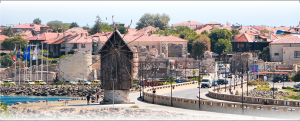
The ancient city with a thousand-year history is located on a small rocky peninsula, 850 m long and 350 m wide, connected to the mainland by a narrow isthmus. Today, valuable monuments from different eras of its existence are preserved: monumental fortress walls, basilicas, a unique water supply system and imperial baths, picturesque medieval churches, Revival houses, windmills, narrow winding streets.
Today the old part of the city is an attractive place for romantic walks along the narrow cobbled streets and numerous shops offering handmade souvenirs – ceramics, knitting, jewelry.
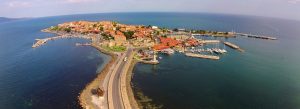
The peninsula of Nessebar – The ancient town of Mesambria, also called Mesemvria in the Early Middle Ages and later on Nessebar, was inhabited in the late Bronze Age. The ancient Thracians called it Melsambria, which means “city of Melsas”, the legendary founder of the town. At the end of the VI century BC the first Greek settlers arrived – the Dorians. The city gradually started developing – temples, a school and a theater were built.
Mesambria began minting its own coins around 440 BC and had good trade relations with the polises of Black Sea, Aegean Sea and Mediterranean Sea.
In 72 BC, the town was occupied by the Romans, without any resistance. After a short occupation, in the first century it became part of the Roman Empire. Mesembria, as called back then, with its intact fortress walls and large public buildings, remained an important commercial and cultural center on the Black Sea coast of Roman Thrace.
The town first became part of the Bulgarian state in 812, when Khan Krum striked and conquered it, and Slavs and Bulgarians settled here. Nessebar, as the Slavs called the town, remained in Bulgarian hands for a long time, during the reign of Tsar Simeon the Great.
After almost 40 years of Byzantine rule, Nessebar entered the borders of the Bulgarian state again in 1304 during the reign of Tsar Theodore Svetoslav. The town then flourished during the reign of Tsar Ivan Alexander.
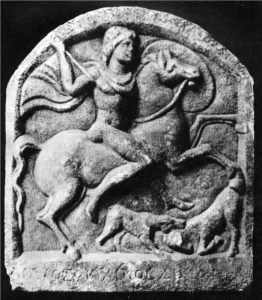
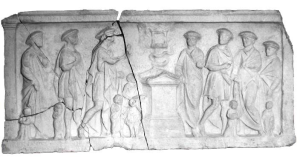
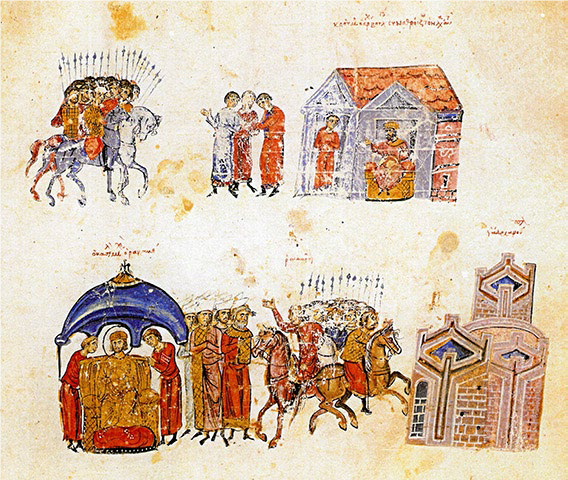
The city was attacked by the Turks for the first time in 1396. Its final fall into the hands of the Ottoman Empire took place in 1453, together with the capital Constantinople. During the years of Ottoman rule, the economic and cultural life did not stop. Churches were built and icons were still painted. Many houses from the Renaissance period have been preserved – typical representations of the Black Sea architecture, as well as many windmills, public baths and fountains. Since the end of last century, Nessebar is a small town with fishing and agriculture (mainly viticulture and flax production) as main livelihood. Since 1959, after the construction of the Sunny Beach Resort, international tourism has been actively
developing in the city and its surroundings.
4 HISTORY
Thanks to its unique nature and very well preserved monuments from different eras, at the VII session of the World Heritage Committee in Florence in 1983, the old town of Nessebar was included in the UNESCO World Heritage List.
Nessebar is one of the most dynamically developing towns in Bulgaria. In 2014, it won the “Fastest Growing City” award for the real baby boom amid the country’s demographic crisis. Built in Nessebar are modern kindergartens, a city stadium, a
modern center for culture and education – Artium, and a new town square, which is located in the heart of the modern town. A coastal promenade connects the isthmus of Old Nessebar with the largest Bulgarian resort Sunny Beach. During the summer, the town is visited daily by over 30,000 tourists, attracted by the millennial history of the ancient city, the romantic streets, small shops with handmade souvenirs and numerous fish restaurants that allure with their fresh seafood.
CHURCHES
Nessebar is called the “Bulgarian Ravenna” because of the numerous churches
there. Legend has it that there were over 40 temples here, 15 of them preserved
to date, which are also part of a new cultural and historical route called “Spiritual
Path”. The medieval temples of Nessebar are open for visitors, they are turned
into artistic studios, galleries and chamber halls.
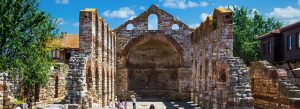
1. Sofia Basilica – the well-known “Old Metropolis ” was built in the middle of the 5th century. It was built on the ruins of an ancient temple of Apollo. It is a three-nave basilica with one apse, marble colonnades and an atrium (yard). In the 9th century it was rebuilt and the marble colonnade was replaced by a masonry one. The relics of St. Theodore Stratilat were preserved there.
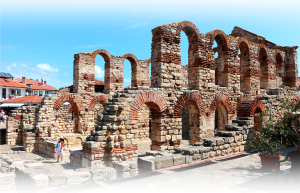
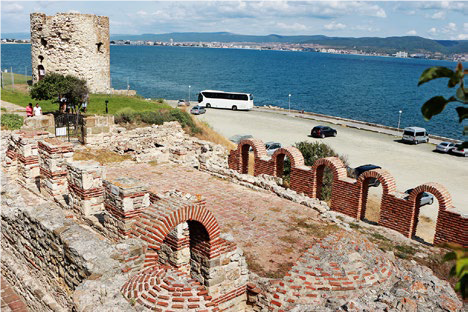
2. Vergin Mery Eleusa (Tenderness) Basilica dates from the middle of the 6th centuries. It is located in the northeastern part of the peninsula, close to the Windmill. The architechture is similar to the St. Sofia basilica, but with a three-part apse. The church owns the icon of Virgin Mary Eleusa (Tenderness), silver plated by the Bulgarian Tsar Ivan Alexander.
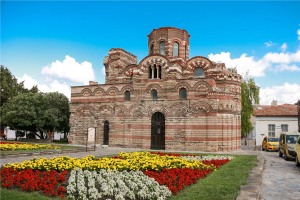
3. Christ Pantoctaror (Almighty). Church Christ Pantocrator (Almighty) church is located in the city center. It is cross-domed, with a dome and a belfry above the vestibule. What makes it remarkable is the rich ceramic decoration, typical for the
Mesembrian churches from the XIII – XIV century, which form the so-called “Picturesque style”.
4. St. Stephen or “The New Metropolis” was built in the 11th-13th centuries.
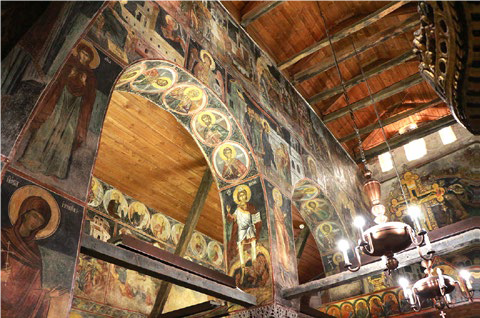
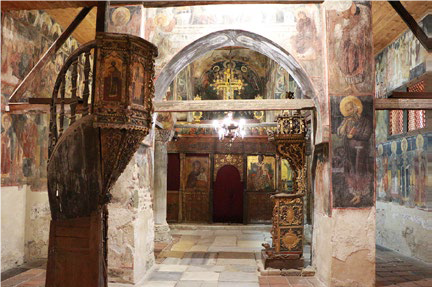
Valuable frescoes from 1599 are preserved in it. 258 scenes with more than 1000 faces are depicted. Since 1974 the church has been open for visitors. Thanks to its preserved architectural appearance, the iconostasis and its highly artistic frescoes, the St. Stefan church is one of the most significant monuments of the Bulgarian cultural heritage.
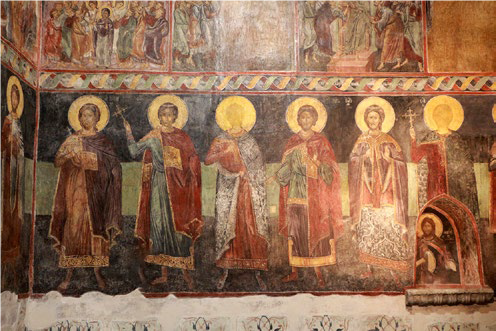
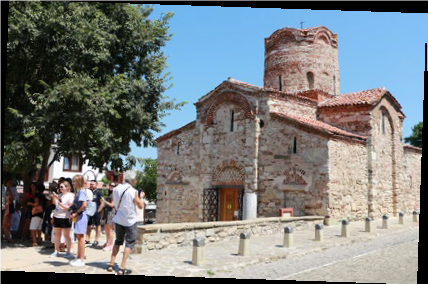
6. St. John the Baptist Church
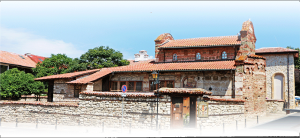
It was built at the end of the 10th and the beginning of the 11th century on the site of an older basilica. It is cross-domed, with three semicircular apses to the
east. The space inside is seperated by two longitudinal walls in 3 naves, covered by semi-cylindrical arches. The Golden ratio was used in the design and construction of the temple – the harmony in the proportions is achieved through art and geometry. The mysterious light from the chandeliers and candles has prevailed here. The church is part of the cultural and tourist route “Spiritual Path”, part of the project of the Municipality of Nessebar “Faith in Nessebar”.
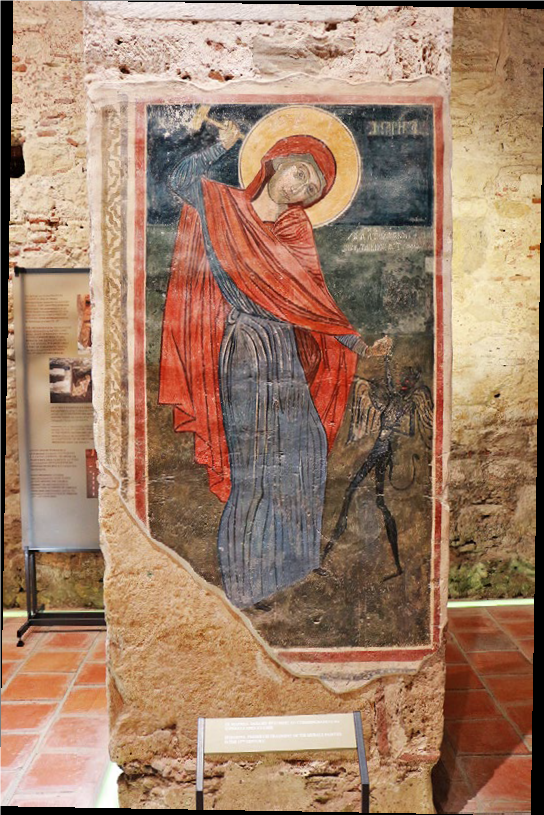
7.St. Paraskeva Church
The church is single-nave, with a dome, and a belfry rising above the vestibule. It is part of the cultural-tourist route “Spiritual Path”, in the project of the of Nessebar “Faith in Nessebar”.
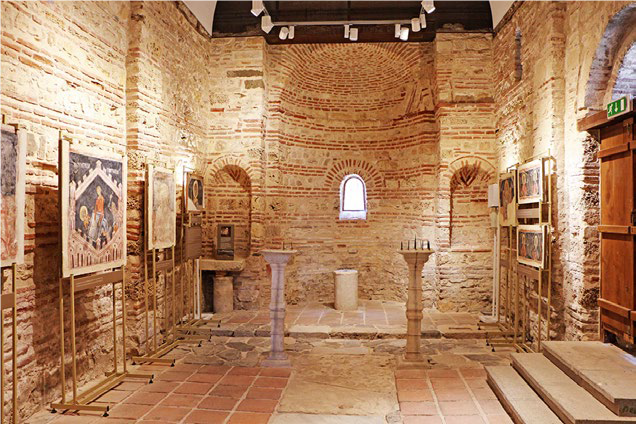
7.The Church of the Assumption (Bogoroditsa Megarska)
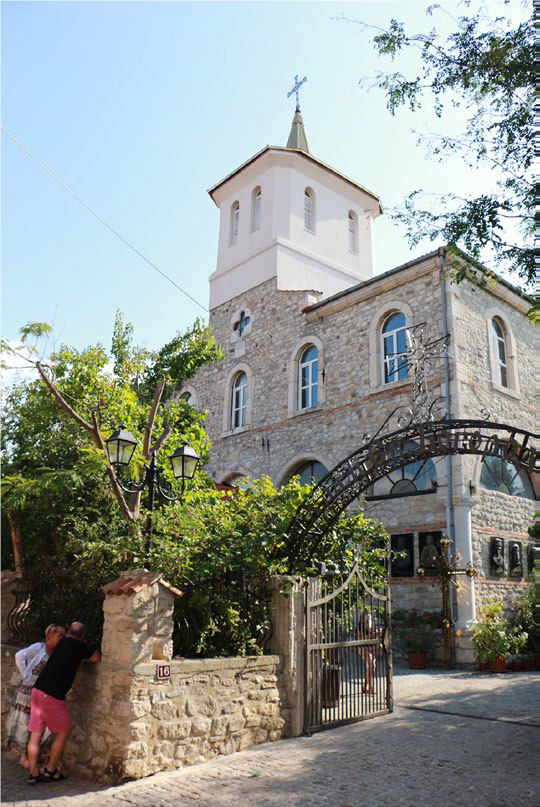
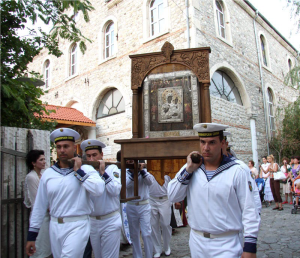
The Church of the Assumption (Bogoroditsa Megarska) was built for several decades intermittently – from 1857 to 1894. It was consecrated on 21.05.1894 – the day of the “Holy Apostles Constantine and Helena”. Here is the miraculous icon of “St. Virgin”. The Church of the Assumption is the only functioning church in Old Nessebar. It is the largest and best preserved three-nave basilica in the town with a dome and late iconography. Its bell-tower rises high above the other buildings in Old Nessebar. Many tourists and guests of Nessebar choose to get married here.
City Symbols
The Windmill
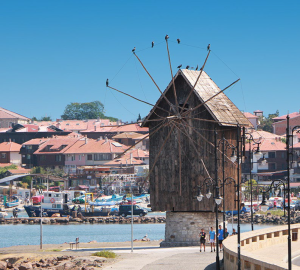
The windmill in Nessebar is one of the symbols of the town. It is located on the isthmus between the Old and New Town in Nessebar. Its foundation is made of stone and the upper part is made of wood. It has remained since Turkish times, but self-destructed in 1929. After 1944, the windmill was rebuilt and became a popular tourist attraction.
The Fortress Walls
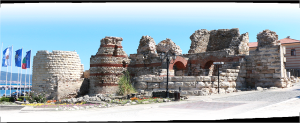
During the centuries-old existence of Nessebar, fortress walls and facilities were
repeatedly built, which made the peninsula inaccessible. As a result of many years of archeological research, parts of the fortification system of the city have been discovered, which date from different epochs: Thracian, Hellenistic, Old Christian, Byzantine. Discovered were also many reconstructions, repairs and additions of new elements. Most thoroughly studied are: the Western fortress wall with the pentagonal towers at the main gate of the city; the round towers; the horseshoe-shaped and quadrangular ones, as well as a large part of the Southern fortress wall with the quadrangular towers. Parts of the fortification system have also been found in the waters of the peninsula.
The Early Byzantine Baths
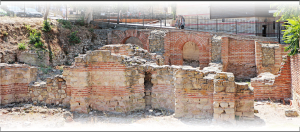
Early Byzantine baths were built in the VI century during the reign of the Byzantine Emperor Justinian I the Great. They are located in the northern part of the peninsula, northeast of the St. John the Baptist church. They are a complex of premises and halls. Some of them have not been studied due to the presence of modern residential buildings around. The baths functioned as intended until the end of the 8th century.
Bulgarian Revival Houses
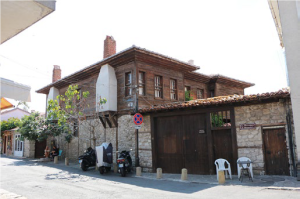
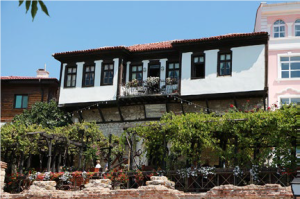
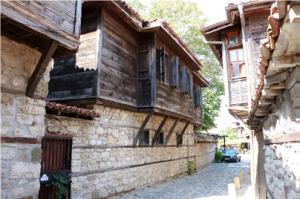
Over 100 houses from the Revival period have been restored in Nessebar, and form picturesque architectural ensembles. The lower story of the house is built of stone and mud. Barrels of wine and all handicraft inventory were stored inside. A narrow and steep staircase leads to the upper floor, where the rooms are built around a large hall.
The Old Fountain
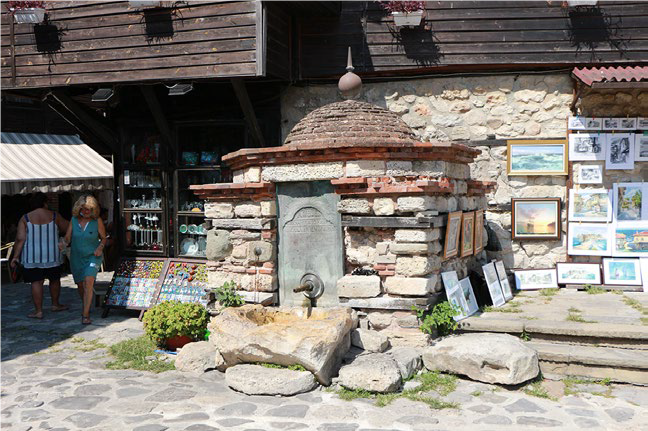
The Old Fountain in Nessebar is one of the attractions of the town. It has been preserved since the time of the Turkish rule in Nessebar, which lasted more than 400 years (1452-1878). The fountain is located in the Old Town and is tourists’ favorite place for taking photos. Hundreds of holidaymakers stop here to quench their thirst in the hot summer months.
The Streets of Nessebar
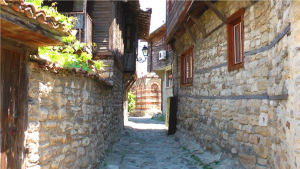
The romantic, cobbled streets in Old Nessebar carry the spirit of the ancient town. When you walk through them you immerse yourself in the atmosphere of bygone times, among the ruins, ancient gates, numerous churches and typical Black Sea houses. The picturesque streets will lead you to a fish restaurant, where you can gaze at the sea and the rocks. The streets of Old Nessebar attract with small galleries and souvenir markets.
The Stone Windmill
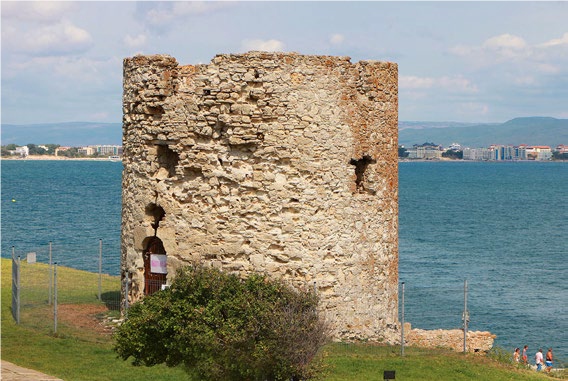
It is located on the north coast of the peninsula next to the remains of the Basilica of Virgin Mary Eleusis. The huge body of the mill is a regular cylinder with massive walls, built of crushed stone, excavated on site. Through the arched door, which has a stone block frame, you enter the ground floor, which served as a store-room. A massive staircase of oak logs leads to the second floor. The working room of the mill is located on the third floor. Here are the millstones, still preserved, as well as the partially-preserved mechanism, which was used for the force of the wind.
The Old Lighthouse Tower
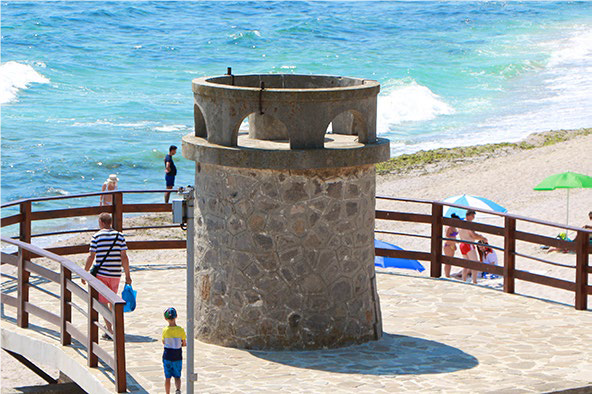
The lighthouse was lit for the first time on July 25, 1932. White flashing light with a periodicity of 5 seconds is visible at a distance of 4 miles. After the construction of the breakwater in 1954, a four-sided metal structure of 7.5 m was erected, on which electrical optics were mounted.
The Fishing Port
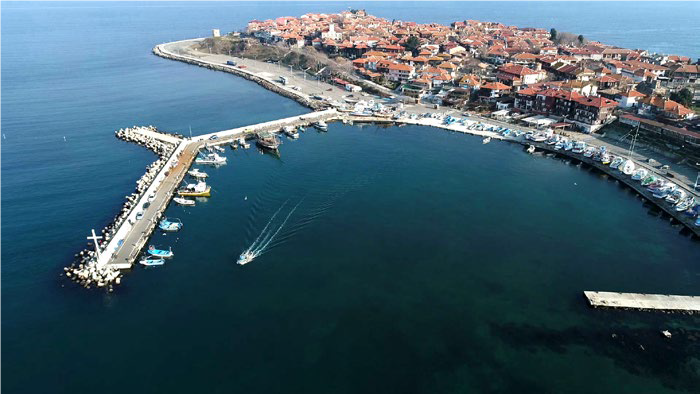
The small fishing port is connected to the livelihood of the people in Nessebar. It has also become an attraction for tourists, who stop to take pictures as a souvenir and to buy freshly caught fish. It is soon to be modernized, and the conditions for catching, unloading and first sale of fish will be improved.
The New Town of Nessebar
The landmarks
NATURE
The natural resources of Nessebar and the unique combination of sea and mountains have made Nessebar a favorite place for tourism and recreation.
Natura Protected Areas 2000
Nessebar falls within the Protected Areas of the Natura 2000 Ecological Network, according to the Biodiversity Act: Emine Protected Area under the Wild Birds Directive and Aheloy-Ravda-Nessebar Protected Area under the Wildlife Conservation Directive and fauna.
Aheloy – Rvda – Nessebar Protected Area
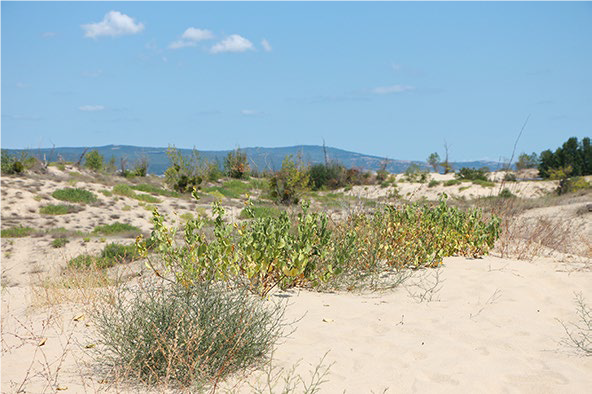
Protected in the Aheloy-Ravda-Nessebar
Protected Area are permanent marine and terrestrial natural habitats, including dunes, as well as species of mammals, amphibians, reptiles, fish and invertebrates. Extensive shallow bays, dunes, sandy and rocky coastal areas, also fall into the protected area.
Natural Landmarks “Sand Dunes”
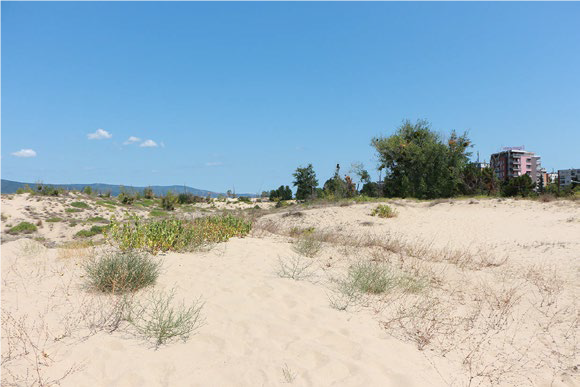
There are 5 sand dunes in the territory of the town of Nessebar, with a total area of about 10 ha. In that specific ecological environment, plant formations of extremely rare shrub, flower and grass species have emerged. Some of them are already in the Red Book of Bulgaria.
Among them are: Sea daffodil (Pancratium maritimum) – an extremely beautiful leafy ornamental plant that blooms with large, white and fragrant flowers throughout
the summer – from July to September; Ravenna Grass (Erianthus ravennae) – a grass species about two meters high, with beautiful ribbon-shaped leaves and a silvery-white inflorescence, included in the Red Book of Bulgaria. Sea holly – (Eryngium maritimum) – a rare perennial herbaceous plant with silvery leaves and light blue flowers. Stachys maritima – blooms from May to August.
Beaches in Nessebar
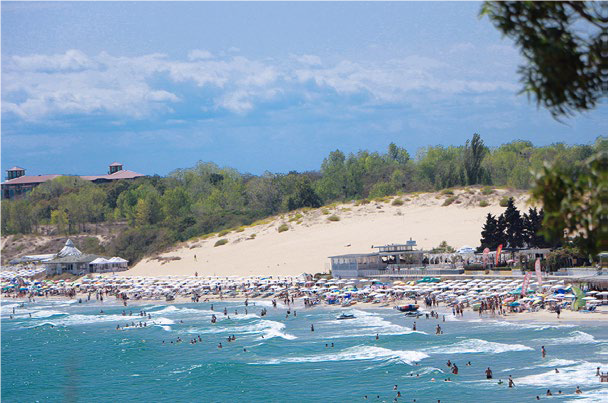
Many consider the beaches in Nessebar to be the most beautiful in Bulgaria. The International Ecological Award “Blue Flag” was awarded to the wide strips of pure golden sand, stretching from Ravda to St. Vlas.
Cultural and Tourist Routes
Hidden Messembria
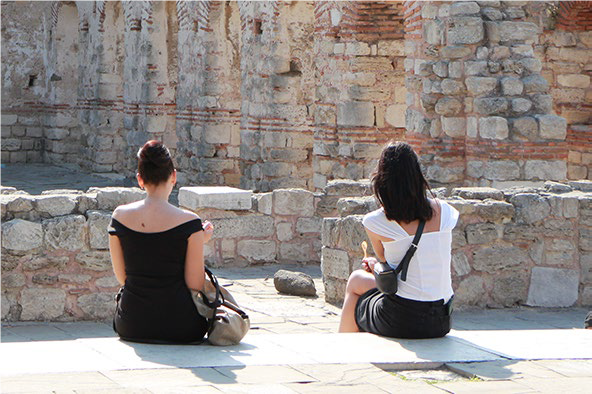
The main focus of the route are the archaeological treasures of Nessebar. The route splits in three directions: Land route – in the area of the western and southern fortress walls, in the north-western part of the peninsula along the archeological structures; and in the southeastern part related to the hidden and underwater archeological elements. Sea route – by boat along the old contours of the Nessebar peninsula.
Spiritual Paths
The spiritual path is a cultural and tourist attraction, part of the project “Faith in Nessebar”, which includes the churches of Nessebar. The main pedestrian routes are constructed with pavements from the Renaissance period and marked with specially made red stone signs. With the spiritual path Nessebar incorporates the cultural and pilgrimage tourism to the traditional in the region holiday tourism. The churches along the Spiritual Path route are united in several thematic areas: The First Temples; The Arts, The Lost Churches, Education, Urban Culture, and the Virtual Abode.
On the Streets of Nessebar
The main focus of the route is everyday life and livelihood in Nessebar. The route “On the streets of Nessebar” shows the traditional architecture, way of life and livelihood in the town by stimulating crafts, small restaurant business and home production related to local traditions. Along the route are the thematically separated areas: “Fisherman’s Wharf”; “Crafts”; “Delicious from Nessebar”.